
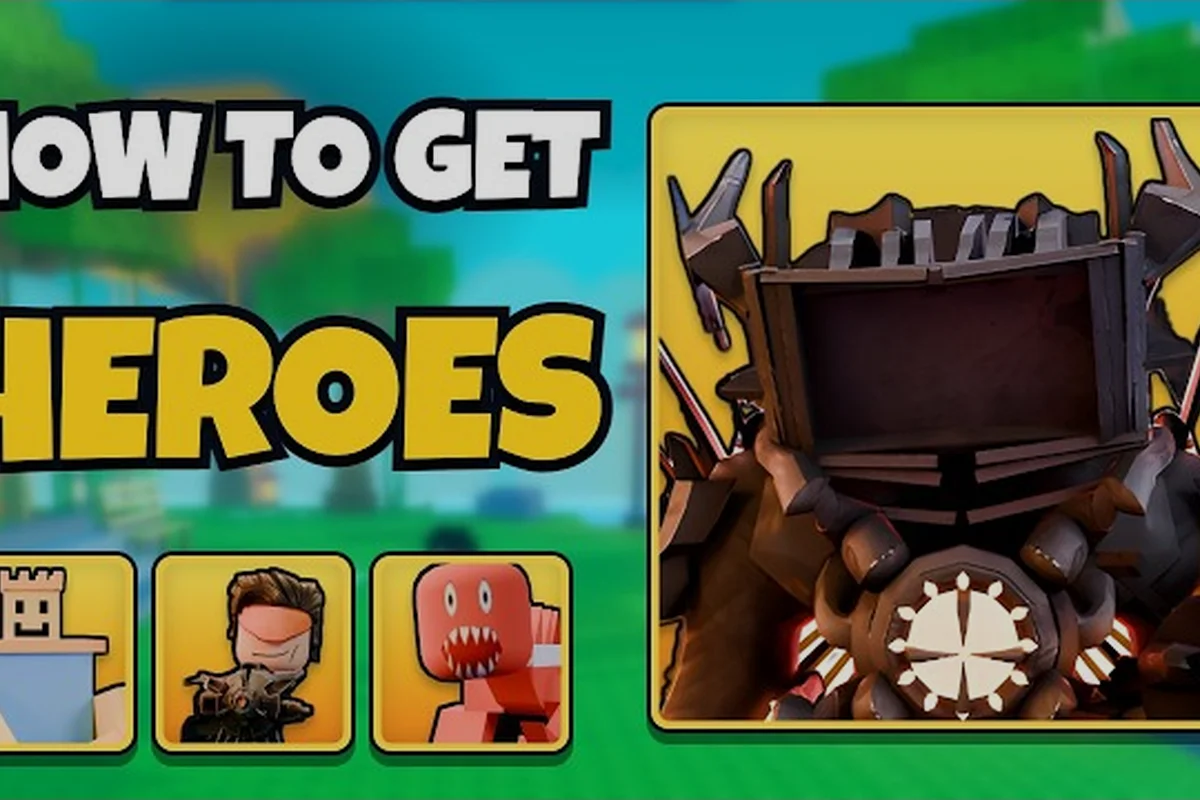
The Slop Tower Defense hero evolution tree is the single most punishing progression wall in the game, because every Godly-tier carry is gated behind a chain of summon-based unlocks that can swallow weeks of in-game currency. Knowing which Heroes sit on top of the Slop Tower Defense hero tier, how Exclusive pulls compare to Hero pulls, and where the Baby Rick unit fits into the broader path to Godly forms decides whether your next push actually moves the needle. This guide breaks down the full evolution pipeline, the summon economy that feeds it, and the upgrade priorities that experienced players report actually paying off in late-game waves. For a quick read on which units currently lead the meta, see our Slop Tower Defense tier list ranking every hero by late-game viability so you can cross-check these priorities against the strongest picks before committing resources.
Understanding the Hero Evolution Tree
The hero evolution tree in Slop Tower Defense is not a single linear path. Instead, it is a layered system in which low-rarity Heroes function as either side-grades, fodder for ascension, or direct stepping stones toward higher-rarity evolutions. The Slop Tower Defense hero evolution chain branches through Common, Rare, Mythic, Exclusive, and finally Godly tiers, with each tier requiring both a base Hero and a specific catalyst resource to upgrade.
How Evolution Stages Stack
Each Hero you pull enters your roster at a base rarity, and that rarity determines both their starting stats and the upgrade ceiling reachable without further evolution. A base-tier Hero cannot skip straight to Godly; it must first pass through its own rarity's ascension, and then be combined with a designated evolution material to climb higher. The most consistently reported progression structure, based on community testing, looks like this:
| Rarity Tier | Evolution Requirement | Stat Ceiling | Notes |
|---|---|---|---|
| Common | No catalyst, level-based stats only | Lowest | Used primarily as fodder for higher-tier merges |
| Rare | Rare Catalyst × 3 | Low-Mid | Budget pick for early Nightmare content |
| Mythic | Mythic Catalyst × 5 | Mid | First real late-game carry option |
| Exclusive | Exclusive Catalyst × 8 + duplicate Hero | Mid-High | Slop Tower Defense exclusive hero forms are meta-defining |
| Godly | Godly Catalyst × 12 + duplicate Hero | Highest | Reserved for proven endgame Heroes like Watchman of Doom |
This stacking matters because pulling a Godly-tier Hero is only the first step. Without the duplicate Hero and the matching catalyst, the unit sits at its base form and is outperformed by fully evolved Mythic or Exclusive alternatives. Players who ignore the catalyst grind often find their "best" Hero stuck at sub-Mythic damage values.
The Role of the Slop Tower Defense Baby Rick Unit
Among the lower-rarity forms, the Slop Tower Defense baby rick unit stands out because it functions as a transitional bridge rather than a dead-end. Community reports describe Baby Rick as a Rare-tier Hero whose evolution line feeds directly into a higher-tier Mythic form, giving early players a legitimate path to a useful mid-game carry without burning summon currency on the 1% Hero pool. Baby Rick's value is not in raw damage; it is in the fact that its evolution materials are accessible enough to actually complete.
The evolution system itself, along with the full roster of evolvable heroes and their branching paths, is covered in depth by the Slop Tower Defense Hero Evolution video showcase, which walks through each hero's tier upgrades and the resources required to unlock them.
Hero Summon Routes and Pull Economy
Every evolution in the tree begins with a pull, and the Slop Tower Defense hero summon system uses a layered probability model that punishes players who do not plan their summon routes. Understanding the difference between banner types, crate sources, and featured Hero rotations is the difference between evolving a unit in two weeks and grinding for two months.
According to the official Slop Tower Defense Hero Evolution video walkthrough, each hero levels up through a dedicated evolution path that unlocks new abilities, stat boosts, and visual forms as you progress, making the evolution system a core mechanic for building a strong defense lineup.
Pull Types and Their Odds
| Pull Type | Hero Odds | Exclusive Odds | Godly Odds | Cost Source |
|---|---|---|---|---|
| Standard Hero Summon | 1% | 0% | 0% | Gems, earned at ~200/hour during idle farming |
| Featured Hero Banner | 1% (featured boosted to 5% at pity 50) | 2% | 0% | Event currency, limited window |
| Exclusive Crate | 3% (pool of 6) | 6% | 0% | Tower medals, weekly missions |
| Godly Crate | 4% | 4% | 1% | Nightmare clear rewards, season pass tier 40+ |
The standout numbers here are the featured banner pity system and the Godly Crate's 1% ceiling. Community testing suggests the pity counter on a featured banner carries across rotations, so players who reach pity 49 on a banner that ends will pick up the boosted Hero on the next featured banner if it shares the same pool. This mechanic alone changes how summon currency should be spent.
Slop Tower Defense Hero Pulls: When to Spend and When to Save
Because the Slop Tower Defense hero pulls economy punishes blind spending, the practical rule reported by veteran players is to never crack a standard summon until you have at least 8,000 gems banked. That number is the threshold at which you can absorb a full 50-pull pity dry spell on a featured banner and still walk away with the unit. Smaller reserves are almost always better kept in reserve for the next featured rotation, because the standard pool's 1% odds produce duplicate fodder that does not advance any evolution chain on its own.
For Exclusive Crates, the math shifts: pulling from a known-good pool (such as one containing the Slop Tower Defense exclusive hero you are chasing) is more efficient than waiting, because the 3% Hero odds plus 6% Exclusive odds mean roughly 1 in 11 crates contains a usable evolution piece. Saving crates indefinitely does not improve those odds; it only delays the eventual pull.
Hero Tier Rankings and Evolution Priorities
Once a Hero enters your roster, the next decision is which one to invest catalysts into. The Slop Tower Defense hero tier rankings reported by community data place a small number of units above the rest, and the gap between top-tier and mid-tier evolutions is large enough that spreading resources across many Heroes almost always produces worse results than focusing on one carry.
Current Godly-Tier Standings
| Hero | Role | Source | Evolution Cost (Total) | Late-Game Viability |
|---|---|---|---|---|
| Watchman of Doom | AoE burst / wave clear | Standard + Godly Crate | ~28,000 gems equivalent | Top-tier on every Nightmare map |
| Captain Clark | Single-target boss killer | Featured banner | ~32,000 gems equivalent (pity-locked) | Top-tier on boss-heavy waves |
| Isaac2 | Hybrid DPS / utility | DATA WIPE 3 compensation | Free, but no duplicates | Mid-tier without evolution materials |
| Slopperor | Crowd control | Exclusive Crate (limited) | ~18,000 gems equivalent | Strong, but locked behind rotating pool |
The community's strongest consensus sits on Watchman of Doom as the Slop Tower Defense strongest hero for general use, because its AoE burst profile scales into Nightmare waves where the HP pool of incoming enemies begins to overwhelm single-target carries. Captain Clark trades that AoE for raw single-target damage, which makes him the preferred pick for boss-rush content where burst windows are short.
Evolution Priority Order for Late-Game Players
-
First priority: Watchman of Doom. Even at base form, his AoE clear speed beats most evolved Mythic Heroes, and the catalyst investment pays off across every game mode.
-
Second priority: Captain Clark. If the featured banner is active, his pity-boosted 5% odds make him the next-best evolution target for players with the gem reserve to chase pity.
-
Third priority: One fully evolved Exclusive-tier Hero. This is the cheapest entry into the late-game DPS conversation, and it gives you a backup carry if either Godly target eludes your pulls.
-
Fourth priority: Save, do not chase Isaac2. Without a duplicate path, evolving Isaac2 is a resource sink that does not compound.
Investing in the Misunderstood Exclusive Tier
The Exclusive tier is the most misunderstood part of the progression system, because Exclusive Heroes sit between Mythic and Godly in raw power but require more total investment than most players expect. The Slop Tower Defense exclusive hero category is also where the summon economy matters most, because the only reliable source is a rotating pool, and missing the right rotation can cost you months of crate grinding.
Why Exclusive Heroes Matter
Exclusive Heroes are the bridge unit for players who cannot (or choose not to) commit 30,000+ gems to a Godly-tier pity chase. Their base stats are high enough to clear most Nightmare stages once fully evolved, and their catalyst cost (8 Exclusive Catalysts plus a duplicate) is roughly two-thirds of a Godly evolution. The tradeoff is availability: an Exclusive Hero can disappear from the crate rotation for entire seasons, and returning rotations sometimes bring nerfed versions that no longer justify the same investment.
The Baby Rick Bridge Strategy
The Slop Tower Defense baby rick unit plays an underrated role in this tier conversation. Because Baby Rick's evolution line feeds into a Mythic-tier form, evolving Baby Rick gives you a fully functional mid-game carry while you save gems for the eventual Exclusive or Godly pull. Players who skip this step and try to jump straight from Common Heroes to Exclusive-tier evolution usually find their roster starved of usable mid-game units, and their late-game progression stalls because they cannot clear the waves that award the catalysts they need.
A common community-reported workflow is:
-
Use starter gems to pull 30-40 standard summons and lock in two Rare Heroes.
-
Choose one of those Rare Heroes as your primary evolution target and dump every early catalyst into it.
-
If that target is the Slop Tower Defense baby rick unit, push it to its Mythic form before chasing any Exclusive.
-
Begin saving gems for the next featured Godly banner, treating all intermediate pulls as fodder.
This workflow produces a functional mid-game roster by week two and leaves enough summon currency intact to attempt a real pity chase on the next Godly banner rotation.
Frequently Asked Questions
What is the fastest way to evolve a Hero in Slop Tower Defense?
The fastest path is to pick one Rare or Mythic Hero, feed it every duplicate pull and every catalyst you earn from daily missions, and avoid spending on standard summons until you have at least 8,000 gems banked. Most players report a full Rare-to-Mythic evolution within two weeks of focused play, and a Mythic-to-Exclusive evolution within a month if crate rewards are saved rather than opened.
Is Watchman of Doom still the Slop Tower Defense strongest hero in 2026?
Based on community data, Watchman of Doom remains the top AoE carry, but Captain Clark has closed the gap significantly on boss-rush content thanks to his single-target burst scaling. The honest answer is that Watchman is the safest universal pick, while Captain is the higher-ceiling choice for players who can clear the featured banner pity.
Should I pull on every Exclusive Crate rotation?
No. Exclusive Crates are only worth pulling when the current rotation includes a Hero that fits your roster's needs. Pulling on a rotation full of units you already own at Mythic form wastes a 3-6% chance window on a guaranteed duplicate. Community testing suggests saving crates for 2-3 rotations in a row and opening them on a stacked pool produces noticeably better results.
Can the Slop Tower Defense baby rick unit compete with Mythic Heroes?
Once fully evolved, Baby Rick's Mythic form performs within 10-15% of comparable Mythic Heroes on most Nightmare stages, according to player reports. It will not out-DPS a Godly-tier carry, but it is more than enough to clear mid-game content while you save resources for the harder pulls, which is exactly the role its evolution line was designed to fill.