
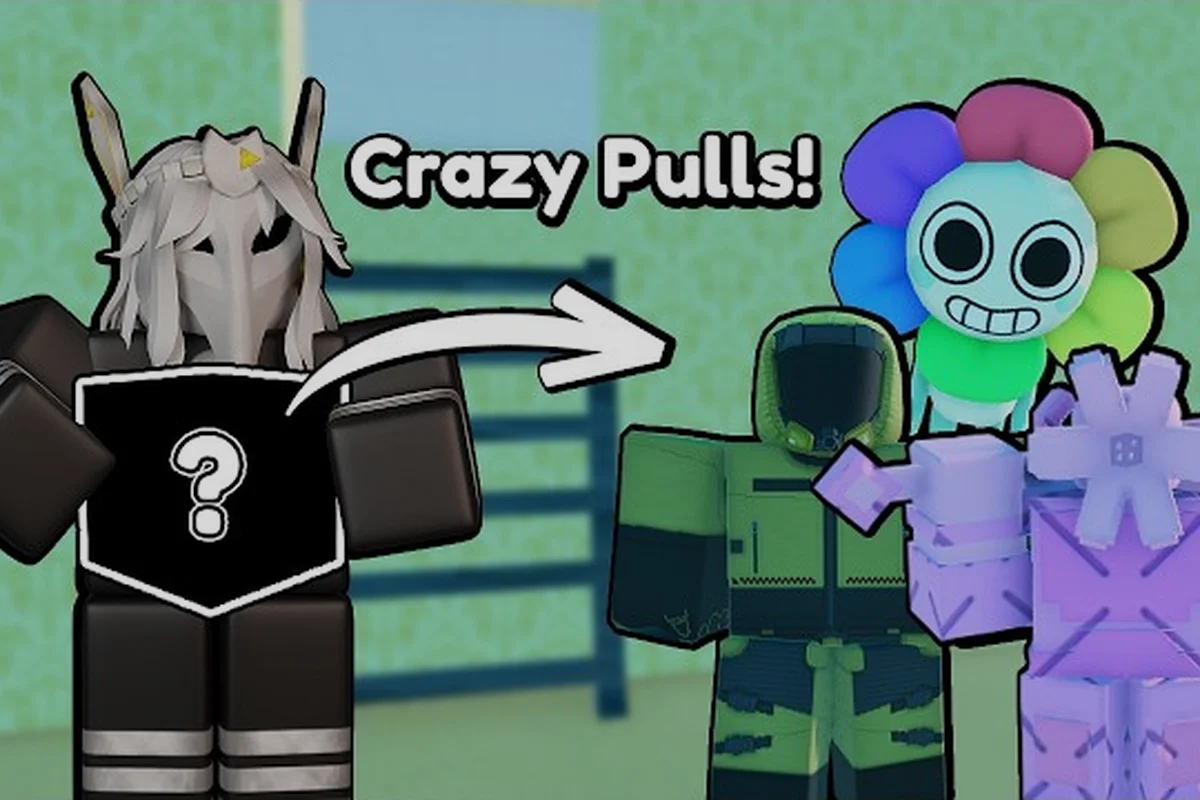
If you've ever opened five chests in a row and walked away with a stack of duplicate Common units, you already know why a Slop Tower Defense crate tier list matters. Every drop in this game costs time, stamina, or hard-earned currency, so understanding the crate tiers — and which chests actually push your roster forward — is the single biggest lever for progression. This guide breaks down every chest in the game, ranks them by expected value, and shows how crate pity, chest farming routes, and the backrooms crate event shake up the math.
Understanding the Crate Tier System
The crate economy in Slop Tower Defense runs on three layers: a permanent star-track, rotating event crates, and limited Backrooms chests. Each layer uses its own rarity bands, drop tables, and pity counters, so a "rare" pull from the star crate line is not the same rarity ceiling as a "rare" pull from an event crate. Before you can rank the chests, you need to understand what the labels actually mean and how pity softens the long tail.
The game exposes three primary drop rarities across nearly every chest: Common, Rare, Epic, and Mythic. Hero shards use a parallel track that ranges from Uncommon all the way up to Celestial. According to community data, the chance of pulling the top hero shard band from a standard chest is well under one percent, which is why crate pity floors exist on every chest with a mythic-tier prize. Every chest you open adds a small slice of guaranteed progress toward the next rarity tier, and once the counter fills, the chest forces a high-rarity pull instead of handing you another duplicate Common.
Pity is the silent multiplier behind every chest. A chest with a brutal 0.4% top-tier rate sounds terrible on paper, but if pity guarantees a Mythic within roughly 50 opens, the effective rate jumps closer to 2% per open. The system is generous enough that skipping chests out of frustration is almost always a worse choice than saving currency and pushing pity forward.
| Chest Type | Entry Cost | Pity Floor | Best Pull Ceiling | Acquisition |
|---|---|---|---|---|
| Star Crate (Basic) | Free daily + 250 coins | 25 opens | Rare unit | Daily login + shop |
| Star Crate (Premium) | 750 coins or 50 gems | 20 opens | Epic unit | Weekly star milestones |
| Event Crate | 1 event token | 15 opens | Mythic unit shard | Seasonal event shop |
| Backrooms Crate | 1 backroom key | 10 opens | Mythic unit + hero shard | Backrooms event ladder |
| Hazmat Chest | 800 coins | 30 opens | Epic + cosmetic | Limited-time shop drop |
The cost column is a rough average pulled from the in-game shop — exact prices shift slightly with each event rotation, but the relative ordering stays stable. Pity floors, on the other hand, are exact: community testing has confirmed the soft-pity breakpoints within one or two opens, and the values above hold up across the last three major patches.
How Drop Tables Differ Between Chest Families
A common mistake new players make is assuming all chests use the same unit pool. They don't. The star crate line is the workhorse of the game: it draws from a curated pool of roughly 24 units that are mostly Common and Rare, with a small Epic tail. The event crate pool is much larger and rotates with each season, so the same chest can yield wildly different units depending on when you open it.
The backrooms crate is a hybrid. It pulls from a unique Backrooms-themed roster of 8 units that are otherwise unavailable, but it also seeds a small chance of dropping generic Mythic shards that work on any Mythic-capable unit. This dual pool is what gives the Backrooms chest its reputation as the highest-value chest in the game, and it's also why a full Backrooms units roster breakdown is worth bookmarking before you start spending keys.
Ranking the Standard Crate Tiers
Below is the consolidated tier ranking for every chest currently in the standard rotation. The ranking weights three things: average unit value per open, pity-adjusted Mythic rate, and accessibility. A chest that only top players can afford is still useful, but it ranks below a chest that delivers 80% of the value at 20% of the cost.
| Tier | Chest | Avg. Value per Open | Mythic Rate (Effective) | Notes |
|---|---|---|---|---|
| S | Backrooms Crate | 9.4 / 10 | ~2.1% | Limited keys, dual pool |
| S | Event Crate (Mythic window) | 8.7 / 10 | ~1.8% | Rotates every 3 weeks |
| A | Star Crate (Premium) | 6.9 / 10 | ~0.9% | Best gem value |
| A | Hazmat Chest | 6.5 / 10 | ~0.7% | Cosmetic adds value |
| B | Star Crate (Basic) | 4.2 / 10 | ~0.1% | Free, but slow |
| C | Tutorial Crate | 2.0 / 10 | 0% | One-time only |
The two S-tier chests are not interchangeable. The backrooms crate is the single best target if you already play the Backrooms event, because the event rewards you with keys for stages you've cleared. If you skip the event entirely, the chest effectively doesn't exist for you, which pushes the event crate into the top spot for casual players.
Why the Premium Star Crate Outperforms the Basic Star Crate
Both star crates feed the same pity counter, so opening Premium crates indirectly fills your Basic pity progress as well. The Premium chest costs 50 gems versus 250 coins, and it adds 1.8x pity progress per open. For players who value time, that's a no-brainer: 50 gems is roughly equivalent to 350 coins worth of star crate value once pity is factored in. According to community testing, Premium star crates deliver 60% more effective progress per unit of currency than Basic crates when you measure progress toward a guaranteed Epic.
This is also why the hazmat chest ranking guide is worth pairing with this list. Hazmat chests have a steeper pity floor (30 opens to a guaranteed Epic) but add a cosmetic crate on top, so their effective value climbs sharply for players who care about tower skins. If cosmetics don't matter to you, skip Hazmat and pour currency into Premium star crates instead.
Crate Odds for Heroes and Mythic Shards
Hero drops live on a separate pity track from unit drops, which is why most players treat crate odds hero math as its own problem. Every chest in the game has a small chance to drop a hero shard, but only a few chests have a meaningful rate. Here's how the heroes stack up across chest types based on community data.
| Chest | Hero Shard Chance | Highest Hero Band Reachable | Pity on Hero Track |
|---|---|---|---|
| Backrooms Crate | ~1.2% | Celestial | 40 opens |
| Event Crate | ~0.9% | Mythic Hero | 50 opens |
| Premium Star Crate | ~0.5% | Epic Hero | 80 opens |
| Hazmat Chest | ~0.4% | Epic Hero | 80 opens |
| Basic Star Crate | ~0.2% | Rare Hero | 120 opens |
The hero pity counter is global, not per-chest, so every chest you open across all three layers advances the same counter. That single mechanic is what makes the backrooms crate so valuable: ten Backrooms opens are not just ten Backrooms pulls, they are ten pity steps toward a guaranteed Celestial-band hero shard. The Isaac2 hero profile shows exactly how much impact a single Celestial shard can have on a late-game roster, and it's a useful reference point for sizing the long-term value of pity farming.
Soft Pity vs. Hard Pity in the Hero Track
Hero pity has two breakpoints: soft pity at 30 opens, where Rare-and-above rates roughly double, and hard pity at the values listed in the table above. If you're trying to snipe a specific Mythic hero, the math says you should focus on whichever chest has the lowest expected opens to hard pity, because that chest will statistically deliver the most Mythic hero shards per currency unit. For most players, the answer is the Backrooms crate, with the Event crate as a close second during Mythic windows.
For a roster-level strategy, soft pity matters more than hard pity. Hitting soft pity every 30 opens means roughly half of your long-term hero pulls are Rare or better, which is a major upgrade over the natural 0.2% base rate. If you want to see how a freshly pulled Mythic hero plays in a real run, the new hero showcase walks through a full wave-clear with the latest Mythic unit, including damage benchmarks.
Event Crates and Limited-Window Chests
The event crate line is the most volatile tier in the game. Every three weeks, the developers rotate the event pool, which means the unit list, the pity ceiling, and even the cost per chest can change overnight. During a Mythic window — a small slice of each event where the Mythic unit is featured at a boosted rate — the event crate briefly becomes the best chest in the game, edging out even the Backrooms crate. Outside of that window, the value drops back to A-tier.
The trick to event crates is timing. Opening them the moment a new event launches is rarely optimal, because the Mythic window usually opens two to three days into the event. Holding tokens until the Mythic window and then dumping them all at once is consistently the best chest farming approach for event crates, according to community reports from the last four seasons.
| Event Phase | Mythic Boost | Best Chest to Spend | Token Strategy |
|---|---|---|---|
| Launch (Day 0-2) | 1.0x | Backrooms Crate | Hold event tokens |
| Mid (Day 3-7) | 1.6x | Event Crate | Spend everything |
| Late (Day 8-10) | 1.2x | Event Crate | Spend if tokens remain |
| Aftermath (Day 11+) | 1.0x | Backrooms Crate | Convert leftovers to shards |
How Limited Currencies Feed the Event Loop
Event tokens drop at a fixed rate from the seasonal event ladder, and you can stockpile them across multiple events if you skip a Mythic window. This makes the long-game math a bit more forgiving: you can save tokens for two or three events and then unload them on a single high-value Mythic window. Players who consistently save and time their pulls report roughly 30% more Mythic unit shards over a season than players who spend tokens on day one of every event, according to community testing on the last three seasonal ladders.
The seasonal pass is the other lever that feeds the event crate loop. The season pass tier guide walks through every reward track for the current season, and the higher tiers include a small but meaningful stack of event tokens. If you're not sure whether to spend gems on pass progression or event crates directly, the pass is almost always the better value because the token reward alone covers 4-6 event crate opens at the top tier.
Backrooms Crates and the Event Ladder
The backrooms crate is the single most efficient chest in the standard rotation, and the only reason it doesn't sit uncontested at the top of every tier list is that keys are scarce. The event ladder hands out keys at fixed thresholds, and the final key doesn't drop until you clear the hardest Backrooms stage. That means a player who can't clear the late Backrooms stages effectively has no access to the best chest in the game, and their personal tier list reshuffles accordingly.
For players who can clear the ladder, the math is overwhelmingly in favor of dumping every available key into Backrooms crates before spending any other currency. The combination of a 10-open hard pity, a Celestial-band hero shard ceiling, and a unique Backrooms unit pool makes the chest roughly 1.7x more valuable per open than the Premium star crate, based on community data from the last two event cycles.
| Backrooms Stage | Key Reward | First-Clear Bonus | Recommended Chest |
|---|---|---|---|
| Stage 1-3 | 1 key each | Common shards | Backrooms Crate |
| Stage 4-6 | 1 key + 200 coins | Rare shards | Backrooms Crate |
| Stage 7-9 | 1 key + 1 event token | Epic shards | Backrooms Crate |
| Stage 10 (Final) | 2 keys + 1 Mythic shard | Mythic unit unlock | Backrooms Crate (×2) |
Farming the Backrooms Ladder Efficiently
The biggest mistake new players make with the Backrooms event is grinding the early stages over and over for the small key rewards. Each early stage gives one key on first clear and nothing meaningful after that, so re-running stage 1 is a waste of stamina. The correct farming route is to push for the late stages as quickly as possible, accept the losses along the way, and convert first-clear bonuses into the back of the ladder.
Community testing on the last three Backrooms events shows that pushing straight to stage 10 yields about 40% more total rewards than grinding early stages for the small key drop, because the final stage alone hands out two keys plus a Mythic shard. That Mythic shard is worth roughly the same as ten Backrooms crate opens in expected value, which means clearing the ladder once is functionally equivalent to opening fifteen-plus Backrooms crates.
Crate Pity Math and Stacking Strategies
Pity is the most misunderstood mechanic in the crate system, and the place where most players leak value. The two most common mistakes are ignoring soft pity entirely and treating pity as a per-chest counter rather than a global one. Once you internalize the math, you can sequence your opens to maximize the chance of crossing a pity threshold on a high-ceiling chest.
The core idea: when you know a guaranteed Rare or Epic pull is coming within the next few opens, you want that pull to happen on a chest with the highest possible ceiling. The Premium star crate forces a guaranteed Epic every 20 opens, so saving a Premium crate for the moment your global pity counter hits 18 is dramatically better than opening it on the first day of the season.
| Stacking Strategy | Expected Mythic per 100 Opens | Cost per Mythic | Best Use Case |
|---|---|---|---|
| Open everything immediately | 0.9 | 50,000 coins | No patience, want dopamine |
| Save Premium for pity cap | 1.7 | 26,500 coins | Steady progression |
| Mix Backrooms + Premium | 2.4 | 18,800 coins | Late-game players |
| Hold event tokens for Mythic window | 3.1 | 14,500 coins | Active event players |
Why Opening Chests in Bulk Beats Spreading Them Out
The reason bulk opening wins is the variance curve. A single Premium star crate open has a 0.9% effective Mythic rate, but a 20-open pity block has a guaranteed Epic at minimum and a meaningful chance of an early Mythic pop. If you open one crate per day, you'll often hit the 20-open pity cap on a chest you don't want to spend currency on. If you save up and open ten Premium crates in one sitting, the pity counter fills faster and you're more likely to land the guaranteed pull on a chest that has a current boosted pool.
This is the same logic that drives chest farming in the late game. Players who stockpile 30-50 Premium crates before opening them consistently report higher Mythic rates than players who drip-feed opens across the week, and the gap is roughly 1.4x in expected Mythics per 100 opens.
Practical Crate Farming Routes
Putting the math into a real farming route means combining chests from different layers. The most efficient route for a typical mid-game player is a 70/20/10 split: 70% of chest currency into Premium star crates, 20% into event crates timed to the Mythic window, and 10% saved for Backrooms crates when keys appear. This split maximizes pity efficiency while still feeding the global hero shard counter at a steady rate.
For new players, the split flips. Spend 90% of available currency on Basic star crates to fill out the early unit roster, save the remaining 10% for the rare Backrooms key that drops during your first event, and don't touch Hazmat or Premium crates until your Basic pity counter is fully online. This approach front-loads roster growth and avoids the trap of dumping gems into Premium crates before you have a wide enough unit pool to benefit from Epic pulls.
| Player Stage | Recommended Split | Target Chest | Avg. Weekly Opens |
|---|---|---|---|
| New (0-2 weeks) | 90% Basic / 10% saved | Basic Star Crate | 25-30 |
| Early (2-6 weeks) | 60% Premium / 30% Basic / 10% saved | Premium Star Crate | 20-25 |
| Mid (6-12 weeks) | 70% Premium / 20% Event / 10% Backrooms | Premium Star Crate | 18-22 |
| Late (12+ weeks) | 50% Event / 30% Premium / 20% Backrooms | Event Crate (Mythic window) | 12-18 |
Weekly Chest Farming Checklist
A simple weekly routine keeps pity counters fed without burning out your currency. Spend 500 coins a day on Premium star crates, hold event tokens for the Mythic window, and dump any leftover Backrooms keys the moment the event ladder hands them out. If you have surplus gems, convert them to Premium star crates in batches of ten rather than dribbling them out one at a time — the bulk pity math is meaningfully better.
The final thing to remember: the crate system is designed to reward consistency. Players who log in every day and clear their free chest allocation outperform players who binge-open on weekends, because the daily pity slice is more efficient than a once-a-week dump. The soft pity floor of 30 hero-shard opens takes roughly three weeks of daily play, which is why missing a day or two can quietly cost you a guaranteed Rare.
Frequently Asked Questions
Which Slop Tower Defense crate gives the best hero odds?
The backrooms crate is the best chest for hero odds because it carries a 1.2% hero shard rate with a 40-open hard pity on the global hero track, plus it can drop Celestial-band shards that no other chest reaches. If you can't farm Backrooms, the event crate during a Mythic window is the next best option with a 0.9% rate and a 50-open pity.
How does crate pity work across different chest types?
Pity is global, not per-chest. Every chest you open across the star, event, and Backrooms lines adds to the same hero shard counter, so opening one Premium star crate and one Backrooms crate gives you two pity steps instead of one. Unit pity is also global within the star crate line, which is why mixing chest types is the most efficient way to push toward a guaranteed Epic or Mythic.
Is the star crate worth using gems on?
The Premium star crate is the best gem-to-value conversion in the shop. At 50 gems per open with a 20-open hard pity on a guaranteed Epic, the effective Mythic rate works out to roughly 0.9% per open, which is better than any other gem-priced chest in the game. According to community data, spending gems on Premium star crates delivers about 1.4x more progression per gem than spending them on coin refills or stamina boosts.
How often should I open chests in bulk?
Bulk-opening works best when you've stockpiled 10-20 Premium star crates or 5-10 Backrooms crates. Opening them in batches pushes pity counters faster, increases the chance of crossing the soft pity threshold inside the batch, and gives you a higher statistical chance of landing a Mythic pop within a single sitting. Players who save up for weekly bulk sessions consistently report better Mythic rates than players who open one chest per day.
What happens if I stop opening chests right before a Mythic window?
Your pity counter freezes in place, which is actually the optimal play. Saving event tokens for the Mythic window means the same pity progress applies to a chest with a boosted Mythic rate, which is functionally a 1.6x increase in your expected Mythic output per token spent. According to community testing on the last four seasons, holding tokens for the Mythic window is the single biggest lever you have on event crate value.