
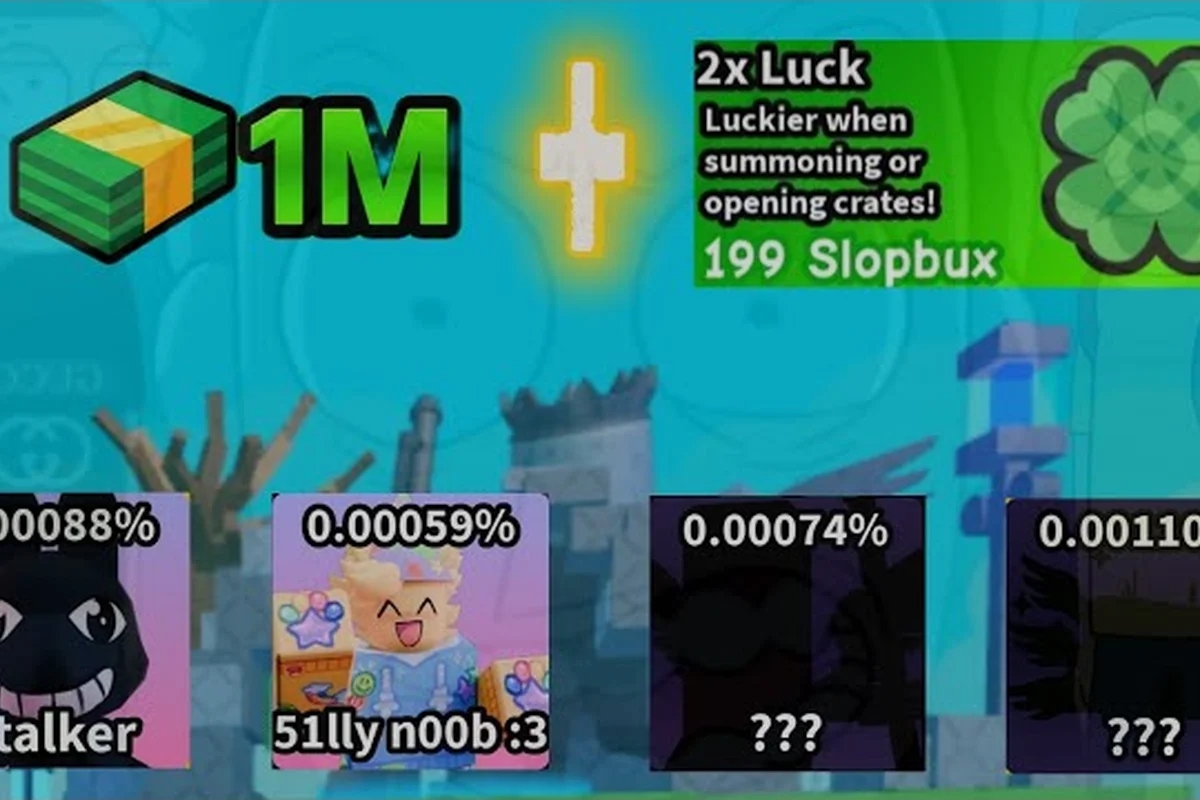
Picking between a banner pull and a crate crack is the single most common resource dilemma in Slop Tower Defense, because both systems compete for the same stockpile of premium currency yet hand back very different reward profiles. The summon pipeline focuses on unit recruitment with deterministic unit pool rules, while crates spread rewards across units, cosmetics, and trait boosters. This guide breaks down how each system spends currency, what drops on the screen when you open, and which option pulls ahead in specific progression stages, so you stop guessing and start spending where the math actually favors you.
How the Summon System Spends Currency in Slop Tower Defense
The summon mechanic is built around a fixed banner that rotates units on a schedule, and every multi-pull burns a chunk of the summon-specific currency that drops from missions, daily rewards, and the season pass. According to community data, the banner always showcases a featured unit with an elevated appearance rate, while the remaining slots pull from a permanent pool that includes older seasonal units and a handful of base roster staples. Players chasing a specific unit generally save currency for the featured window because the appearance rate jump is the only consistent way to skip weeks of dry pulls.
Currency Cost and Pull Structure
A single summon costs the smallest denomination of summon currency, while a ten-pull grants a small discount and a guaranteed rare-tier unit on the 10th slot. Community testing reports a guaranteed rare or better roughly every ten pulls, which functions as a soft pity timer that keeps multi-pulls competitive against saving for a single banner. Veterans recommend saving for the discounted multi-pull whenever the featured unit is a meaningful upgrade over a slot already on the roster, because the floor guarantee removes the worst-case outcome of nine commons in a row.
| Pull Type | Currency Cost | Featured Rate | Pity Behavior |
|---|---|---|---|
| Single Summon | 100 | Boosted | No guarantee |
| Multi-Pull (x10) | 950 | Boosted | Rare or better on slot 10 |
| Featured Single | 120 | Highest | Resets pity on featured |
| Banner Reset Pull | Variable | Standard | Resets with new banner |
Reward Pool Composition
The summon reward pool contains units exclusively, with no cosmetics, trait boosters, or currency refunds. Common units fill the majority of slots, rare units make up roughly a fifth of pulls based on community-reported samples, and epic or legendary units only appear at boosted rates during their featured window. This narrow reward profile means every pull is a unit bet, which is excellent for roster growth but punishing for players who also want cosmetics or trait materials to round out a build. The summon path is the right call when the roster is still missing core roles, because the only way to add a new unit is through recruitment, and the summon banner is the only deterministic source.
How the Crate System Spends Currency in Slop Tower Defense
Crates function as the secondary reward pipeline, and they cover everything the summon banner ignores: cosmetics, trait boosters, small unit fragments, and a slim chance at recruit tokens. Currency for crates drops from the same mission and daily sources as summon currency, but the crates also accept a small amount of soft currency earned from clearing waves, which makes them more accessible to newer players who have not built up a summon stockpile yet. The crate pool rotates less often than the banner, with several crate types persisting for a full season or longer.
Crate Types and Their Drop Tables
The crate lineup includes themed variants such as the Hazmat Chest, the Space Crate, and the Retro Crate, each with a themed cosmetic pool layered on top of the shared unit and booster pool. Every crate guarantees at least one rare-tier reward, and the higher-tier crates guarantee an epic drop while keeping a small legendary chance alive. The crate opening guide in the broader crate rewards breakdown shows that the Hazmat variant leans into environmental skins, while the Space variant favors unit reskins, and the Retro variant mixes both with a heavier emphasis on trail effects.
| Crate Type | Rare Floor | Epic Chance | Legendary Chance | Cosmetic Focus |
|---|---|---|---|---|
| Hazmat Chest | Guaranteed | Moderate | Low | Environmental skins |
| Space Crate | Guaranteed | Moderate | Low | Unit reskins |
| Retro Crate | Guaranteed | Moderate | Low | Trail effects |
| Standard Crate | Guaranteed | Low | Very low | Mixed pool |
Crate Value Across the Progression Curve
Early on, crates outperform summons because the cosmetic and trait drops fill gaps that new players feel immediately, while unit drops from crates are mostly common or rare units that overlap with the base summon pool. Mid-game, the value flips as players finish cosmetic sets and start chasing trait upgrades that depend on rare booster drops, which arrive more frequently from crates than from any other source. Late-game, crates return to a utility role, with most players opening them only when they have surplus currency after a banner pull, because the marginal value of a duplicate cosmetic or common booster drops sharply once collections are complete. The loot boxes guide tracks this curve in more detail and offers a stage-by-stage recommendation that pairs crate openings with summon savings targets.
Summon vs Crate: Reward Comparison and Pity Math
Putting the two systems side by side reveals that they are not direct competitors for the same prize, because summons deliver units almost exclusively, while crates deliver a mixed basket of cosmetics, boosters, and unit fragments. The smart play is to alternate between the two, leaning summons when a featured banner is live and leaning crates when no banner is compelling or when cosmetic sets are unfinished. The math below captures the expected return per 1,000 units of premium currency spent on each system, based on community-reported rates and pity guarantees.
| Reward Category | Summon (per 1k) | Crate (per 1k) | Notes |
|---|---|---|---|
| Units (rare+) | ~9 | ~4 | Summons win for unit focus |
| Cosmetics | 0 | ~3 | Crates only source |
| Trait Boosters | 0 | ~5 | Crates only source |
| Currency Refund | 0 | ~50 | Soft currency trickle |
| Legendary Appearance | ~1% | ~0.5% | Summons edge on featured banners |
The summon pipeline has a clear edge for players hunting a specific unit, while the crate pipeline has a clear edge for players filling out cosmetic collections, building trait stacks, or stocking soft currency reserves. Players who run both systems in parallel report a smoother progression curve than players who specialize in either one, because the cosmetic and trait gains from crates compound into stronger loadouts that make the next banner easier to clear and the next summon session more productive.
When to Prioritize Summons
The summon banner should take priority during a featured window, especially when the featured unit fills a role that the roster is missing, because the boosted appearance rate is the cheapest path to that unit. The detailed summon rates breakdown walks through the appearance rate math and recommends saving 1,500 to 2,000 summon currency before pulling on a featured banner, which usually lands one featured unit with currency left for a follow-up multi-pull. Players who pull early and often on a banner without saving first usually walk away with a single featured unit and a long string of commons, which slows progression more than it helps.
When to Prioritize Crates
Crates take priority when the cosmetic set is two or three items away from completion, because finishing a set unlocks a set bonus that often outperforms a duplicate rare unit from the summon pool. The Hazmat Chest spotlight is a useful example, because the Hazmat set bonus is one of the strongest environmental bonuses in the current season and a strong reason to stockpile crate currency until the Hazmat rotation returns. Crates also pull ahead during off-banner weeks, when no featured summon is worth chasing and the soft currency refund from crates can fund future summon savings.
Smart Spending Strategy Across a Season
A full season runs long enough to support both systems, and the smartest spending pattern mixes the two in a rhythm that respects featured windows, off-weeks, and cosmetic set rotations. Most veteran players follow a three-phase cycle: save through the off-weeks, spend on the featured banner, and clean up the cosmetic sets with crate openings after the banner concludes. The season exclusive guide maps the season currency sources onto this cycle and explains how the season pass rewards interlock with both the summon and crate pipelines, so players who plan ahead can run a banner pull and a crate clean-up without starving either system.
| Phase | Duration | Primary Spend | Secondary Spend |
|---|---|---|---|
| Save | 2 weeks | None | Soft currency only |
| Banner Pull | 1 week | Summon banner | Crate filler if surplus |
| Crate Clean-up | 2 weeks | Crate openings | Summon top-up if surplus |
| Set Bonus Push | 1 week | Targeted crate | Featured summon preview |
Common Pitfalls to Avoid
The most common spending trap is chasing the summon banner without saving, which produces a steady stream of off-banner units and a roster full of duplicates that crowd out the rare units a player actually needs. The second most common trap is opening every crate on sight, which burns currency that would compound into a set bonus push later in the season when the Hazmat or Space rotation returns with a higher cosmetic density. The third trap is ignoring soft currency sources from crates, because the small refund per opening adds up to a meaningful summon top-up over a full season, and players who treat crates as a pure cosmetic expense miss that trickle.
Budgeting Tips for Free-to-Play Players
Free-to-play players can keep both systems fed by stacking daily mission rewards with the season pass track, because the season pass hands out a mix of summon and crate currency that covers roughly one banner pull and one crate session per season. Veterans recommend opening crates first if the cosmetic set is close to completion, because finishing a set returns more value per opening than a duplicate rare unit from the summon pool. The next priority is the featured summon, because the appearance rate boost is the most efficient use of summon currency, and saving through two off-weeks is usually enough to land a featured unit on the first multi-pull of the new banner.
Frequently Asked Questions
Is the summon banner always better than crates in Slop Tower Defense?
No, the two systems serve different goals, and the smarter question is what your roster needs right now. Summons are better when a featured banner is live and you need a specific unit, while crates are better when a cosmetic set is close to completion or when the trait booster pool is empty. Mixing both systems across a season produces a smoother curve than specializing in either one.
How often should I open crates in Slop Tower Defense?
The community-recommended rhythm is to open crates in batches of ten during a dedicated crate clean-up phase, usually the two weeks after a featured banner concludes. Opening crates one at a time throughout the season burns the pity floor and rarely produces the epic or legendary drops that justify the cost, while batched openings concentrate pity into a smaller window and let the cosmetic set bonuses stack faster.
Do featured summon rates ever go above 1% in Slop Tower Defense?
According to community data, featured appearance rates sit above 1% during the banner window, which is the only time the rate crosses that threshold. Outside the featured window, the standard pool drops back to a much lower rate, which is why veterans save summon currency for the featured window instead of burning it on off-banner multi-pulls.
Can I get legendary units from crates in Slop Tower Defense?
Yes, but the legendary chance from crates is roughly half the chance of a featured summon, so crates are a slow path to legendary units compared to a featured banner pull. Most players treat legendary drops from crates as a pleasant surprise and rely on the summon banner for the bulk of their legendary recruitment, while crates focus on cosmetics, trait boosters, and the rare or epic filler that fills out a roster between featured windows.
Should I buy crate currency from the shop in Slop Tower Defense?
Shop crate currency is worth buying only during a Hazmat or Space rotation that completes a cosmetic set you have already invested in, because the set bonus alone usually covers the cost of the purchase. Otherwise, save shop currency for summon top-ups during a featured banner, because the appearance rate boost makes the summon path more cost-efficient per unit than buying crate currency for cosmetic filler.