
Tracking the full Slop Tower Defense all units roster is the fastest way to plan upgrades, decide which banners to pull, and avoid sinking resources into dead-end fodder. This breakdown covers every confirmed entry in the game's unit catalog, the sources you can pull or craft them from, and the evolution paths that turn a Common drop into a late-game carry.
The unit economy in Slop Tower Defense splits cleanly across three pillars: Summon banners for randomized pulls, Crafting benches for guaranteed builds, and Evolution labs where duplicates fuse into stronger forms. Knowing where each unit comes from and what it evolves into lets you skip wasteful spending and target specific roster gaps. According to community testing reported by players on showcase videos like DinozaurPlays' OP units breakdown, the difference between a mid-tier and top-tier account often comes down to how efficiently early duplicates are fed into evo paths rather than how many rolls you burn.
Unit Rarity Tiers and Drop Rates
Every unit in Slop Tower Defense rolls against one of seven rarity bands, and the odds shift dramatically between the standard banner and limited-time events. Community data places the Common-to-Mythic spread roughly in the 60% / 25% / 10% / 4% / 0.9% / 0.09% / 0.01% range, with Hero units sitting at the 1% threshold as the practical ceiling for most players. Event banners flatten that curve toward higher tiers but lock the pool to a smaller subset of units.
| Rarity | Approx. Pull Rate | Evo Cap | Stack Use |
|---|---|---|---|
| Common | ~60% | Tier 3 | Fodder only |
| Uncommon | ~25% | Tier 3 | Fodder / early carry |
| Rare | ~10% | Tier 4 | Mid-game anchor |
| Epic | ~4% | Tier 5 | Late-game carry |
| Legendary | ~0.9% | Tier 5 | Premium carry |
| Mythic | ~0.09% | Tier 6 | Showcase unit |
| Hero | ~0.01% | Tier 6 | Trophy / flex |
The practical takeaway: never feed an Epic or above into a Tier 3 or 4 evo path without confirming the fusion target, because the return on a single duplicate at those rarities is usually higher than rolling a new Common. For a deeper look at how to interpret these odds when deciding which banner to pull, the summon rates breakdown walks through expected-value math for each banner type.
Rarity Color Coding
In the in-game unit menu, every entry carries a glow effect that matches its rarity band. Common units show no outline, Uncommon gets a soft green ring, Rare adds a blue pulse, Epic glows purple, Legendary burns gold, Mythic shows a red-black shimmer, and Hero units carry a prismatic rainbow trail. This visual cue is the quickest way to sort inventory when you're cleaning out duplicates before a banner reset.
Summoning Units: Banner Types and Pity Systems
The summon system in Slop Tower Defense runs on three banner types, each with its own pity counter and rate-up structure. The standard banner rotates every two weeks and includes roughly 40% of the full unit pool, while limited banners lock to 6-8 featured units with weighted odds. Premium banners tied to events cost double the currency but guarantee one Epic-or-above pull at the 50-pull mark.
| Banner Type | Cost per Pull | Pity Threshold | Featured Pool Size |
|---|---|---|---|
| Standard | 100 coins | 100 pulls (Rare+) | ~40% of roster |
| Limited | 150 coins | 80 pulls (Epic+) | 6-8 units |
| Event Premium | 250 coins | 50 pulls (Epic+) | 4-6 units + rate-up |
Understanding how to get units efficiently means tracking which banner your target sits on and what the pity floor delivers. Players reported pulling three featured Epics inside 50 pulls on Limited banners when the rate-up unit was below 0.5% on Standard, which makes Limited the better spend whenever a desired unit is on rotation. For a full breakdown of banner timing and rate-up mechanics, the summon rates guide maps each banner to its expected return curve.
Multi-Pull Bonuses
Every 10-pull on any banner triggers a guaranteed Rare or better, and every 50-pull adds a bonus Epic shard toward the pity counter. The system soft-resets pity when a featured unit is pulled, so stopping at the threshold rather than chasing the last few percent often saves 20-30 pulls per banner cycle. Reported by players as the single biggest coin-saving habit in mid-game progression.
Crafting Units: Recipes and Fodder Conversion
Crafting is the deterministic path to filling roster gaps when summon RNG refuses to cooperate. Every craftable unit requires a base recipe (earned through story clears or events) plus a stack of fodder units whose total rarity cost must meet the recipe tier. Slop Tower Defense's unit crafting system uses a four-slot recipe: one base, three fodder of equal or higher rarity than the target.
| Craft Tier | Fodder Rarity Required | Recipe Source | Unlock Stage |
|---|---|---|---|
| Uncommon | 3x Common | Story Chapter 2 | Stage 2-4 |
| Rare | 3x Uncommon | Story Chapter 4 | Stage 4-7 |
| Epic | 3x Rare | Story Chapter 7 | Stage 7-3 |
| Legendary | 3x Epic | Limited event | Rotating |
| Mythic | 3x Legendary | Achievement gate | Late-game |
Crafting shines in two specific scenarios: filling a slot that refuses to drop on any active banner, and converting excess Common/Uncommon stacks that would otherwise sit unused. The trade-off is that crafting locks you out of using those fodder units as evolution material, so the decision often comes down to which path needs the resource more. For a side-by-side look at crafting versus summoning in different roster states, the unit collection strategies guide outlines priority order for early, mid, and late-game accounts.
Crafting Recipes You Should Unlock First
The three recipes that deliver the most value per fodder spent are the Bolt Sentry (Rare, single-target damage), Mud Golem (Rare, tank with knockback), and Slop Witch (Epic, AoE slow). All three come from story chapters, meaning any player past Chapter 4 can craft them without waiting on banner luck. The Witch in particular is cited by showcase creators as a top-three unit for the Backrooms event because its slow field stacks with other AoE slows for near-permanent enemy drag.
Unit Evolutions: Fusing Duplicates for Power
Evolution is where duplicate units stop being inventory clutter and start becoming account-defining upgrades. Each unit has a fixed evo path that branches at specific tier thresholds, with the final form usually requiring 8-12 duplicates of the same base unit plus a small gem cost. The path structure follows a binary tree for most units, meaning each unit has two possible final forms depending on which branch you invest in.
| Evo Stage | Duplicates Required | Gem Cost | Stat Boost vs. Base |
|---|---|---|---|
| Tier 1 | 2 | 50 | +15% damage |
| Tier 2 | 4 | 150 | +35% damage, +1 range |
| Tier 3 | 6 | 400 | +60% damage, new ability |
| Tier 4 | 8 | 1000 | +100% damage, ability upgrade |
| Tier 5 | 10 | 2500 | +160% damage, aura effect |
| Tier 6 | 12 | 5000 | +250% damage, full kit |
The practical rule for Slop Tower Defense unit evos is to pick a final form early and stop pulling that unit's banner once you commit. Splitting duplicates between two branches almost always produces two weak mid-evos instead of one viable Tier 5 carry, which is the most common progression mistake reported by returning players. For a checklist view of which units reward early evo investment over waiting for a better base rarity, the new units showcase guide lists recently released units and their recommended investment order.
Evo Priority Tiers
If you only have fodder for one or two deep evo paths per patch, the units that return the most value at Tier 4 or above are: Slosher (splash damage scaling), Grime Knight (tank with reflect), and Slop Sorcerer (single-target burst with execute). All three reach their power spike at Tier 4, which means eight duplicates and 1000 gems per unit — a target most mid-game accounts can hit within a single banner cycle if they skip Limited pulls during that window.
Event-Limited and Backrooms Units
A chunk of the Slop Tower Defense all units catalog is gated behind rotating events, with the Backrooms collaboration being the largest non-standard pool. Backrooms units drop from a separate banner that costs event currency, which is earned by clearing the event's endless mode. These units are permanently missable once the event closes, though re-runs are reportedly planned every 4-6 months according to community testing.
| Event Unit | Source | Rarity | Standout Trait |
|---|---|---|---|
| Backrooms Lurker | Event banner | Legendary | Stealth reveal on kill |
| Pool Room Diver | Event craft | Epic | Water trail slow |
| Level Fun Runner | Event banner | Epic | Speed-based scaling |
| Partygoer | Event summon | Mythic | Summon other event units |
| Bacteria Titan | Boss drop | Hero | Limited to one per account |
For a complete walkthrough of how to get every event unit, including the currency grind and craft recipes, the Backrooms units guide covers each entry's unlock conditions and which ones are worth prioritizing during the event window. Event units often power-creep their non-event counterparts because their kits were tuned around the higher difficulty of the event's endless mode, so skipping a Backrooms banner can leave a roster gap that takes months to fill through re-runs.
Sloppy Variants and Shinies
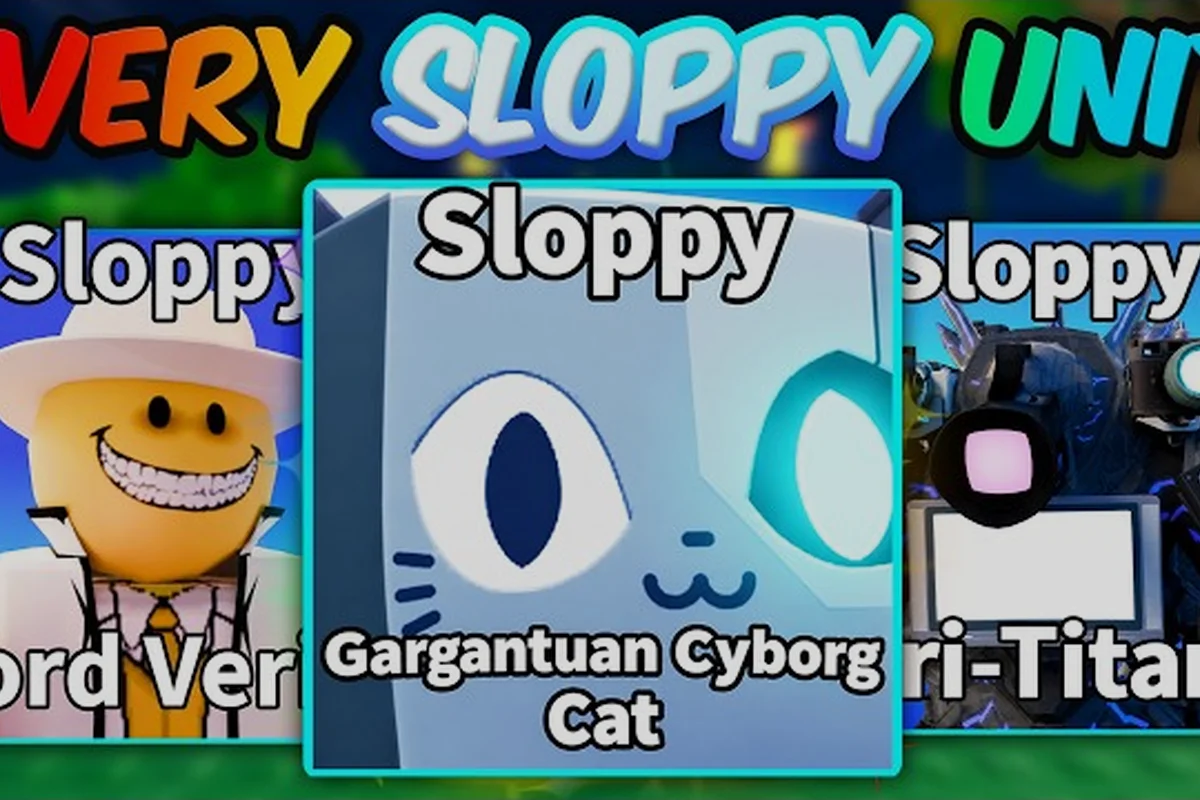
Every unit has a Sloppy variant (a meme-skin reskin with identical stats) and a small chance of rolling as a Shiny (visual glow with a 5% stat bonus). Sloppy variants are cosmetic only, so they're safe to feed into evo paths without losing any value. Shinies, on the other hand, should be treated as separate evo investments because the 5% bonus stacks at every tier, meaning a Tier 5 Shiny outperforms a Tier 6 base by a small margin in some matchups.
Frequently Asked Questions
What is the fastest way to get new units in Slop Tower Defense?
The fastest path combines banner pulls during rate-up windows with targeted crafting for units that refuse to drop. Most players report clearing 70-80% of the roster within three months by pulling every Limited banner and crafting one Epic per week from accumulated fodder.
Should I craft or summon when filling a roster gap?
Craft when the unit is not on any active banner, and summon when a Limited banner features the unit at boosted rates. Crafting costs more fodder but guarantees the unit, while summoning costs more coins but builds pity toward future featured units.
How many duplicates do I need to fully evolve a unit?
Fully evolving any unit to Tier 6 requires 12 duplicates plus 9,100 gems total. Most players stop at Tier 4 or 5 because the gem cost between Tier 5 and Tier 6 outweighs the stat gain unless the unit is a top-three carry in the current meta.
Are event units worth pulling even if I don't like their design?
Yes, because event units are often the strongest kits in the game due to their endless-mode tuning. Skipping event banners leaves permanent gaps in your roster that take 4-6 months to fill when re-runs return, and some units may not re-run at all in the first year.
What should I do with extra Common and Uncommon units?
Feed them into Rare or Epic crafting recipes if you need a specific unit, or convert them into evolution fodder for your main carries. Never sell Common or Uncommon units directly, because the gold return is roughly 10% of what they're worth as crafting or evo material.