
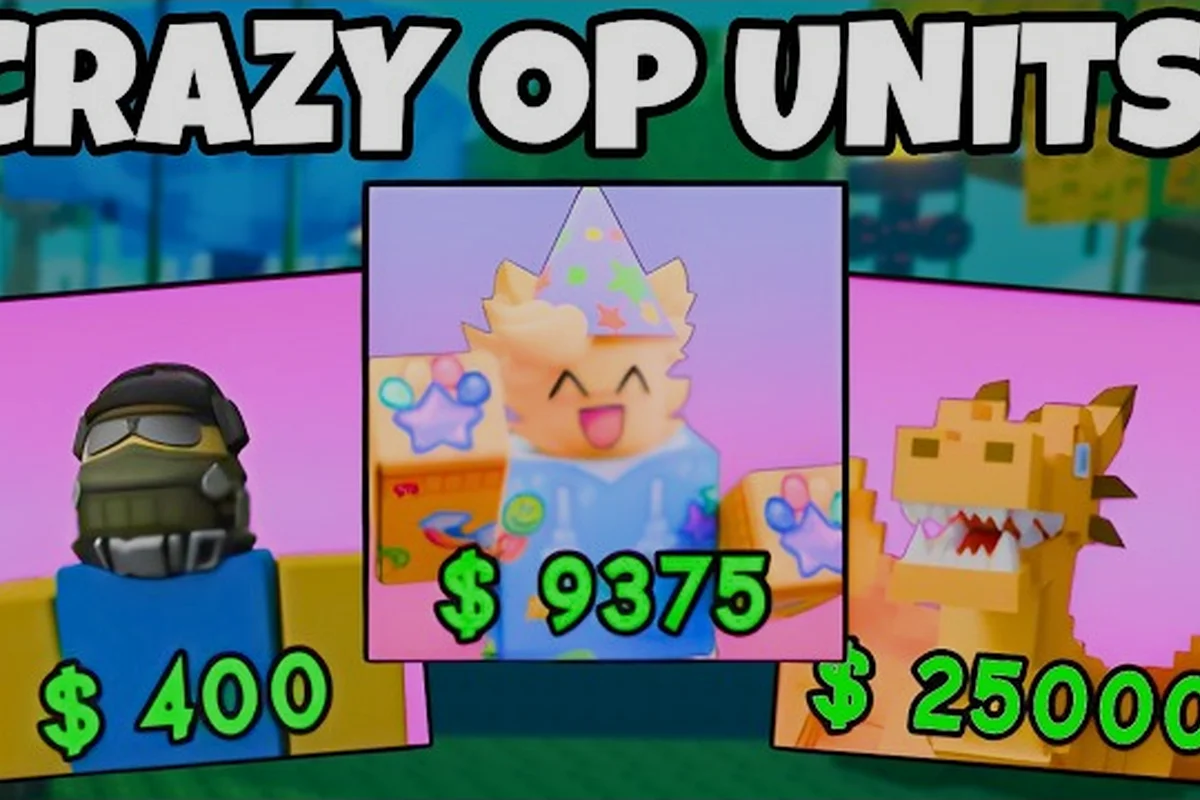
Damage dealers are the backbone of any Slop Tower Defense run, and choosing the right damage-dealing unit often decides whether a wave crumbles or breaks your economy. The DPS roster is the largest sub-category in the unit inventory, and knowing which units to chase, which to feed into the crafting pipeline, and which to keep as trophy duplicates saves hours of grinding. According to community data tracked across the 2026 banner cycle, the gap between a fully-evolved Legendary damage unit and a stock Rare can exceed 4x sustained damage, which is why so many players obsess over the rarest unit in each batch.
This guide breaks down Slop Tower Defense DPS units by role, walks through the crafting recipes that convert fodder into upgrades, and maps the current drop rates so you can plan your pulls with real numbers. If you have ever wondered whether to keep a third duplicate of the same DPS or feed it into the bench, the tables and the step-by-step flow below give a clear answer.
According to the Slop Tower Defense community showcase, sustained DPS output from top-tier units scales sharply with placement positioning and upgrade path selection, making raw stats only part of the damage equation.
What Counts as a DPS Unit in Slop Tower Defense
Not every unit that deals damage is a true DPS pick. Buffers, stuns, and stallers carry damage values on their stat sheet, but their contribution in a real wave is utility, not raw output. The DPS category is reserved for units whose primary function is to apply damage to creeps, either through single-target shots, splash explosions, or sustained beam output.
Defining Roles Within the Damage Dealer Pool
Inside that DPS pool, three sub-roles matter for team-building: each one answers a different lane problem (boss shred, swarm clear, long-path attrition), and identifying the lane conditions your run demands — creep HP per wave, lane length, swarm density, leak penalty — is what turns a random unit drop into a deliberate roster slot when you open the slop tower defense unit inventory.
-
Single-Target DPS — Focused fire on a single creep, ideal for bosses and high-HP tanks. These units usually have the highest per-hit damage but the slowest attack cadence.
-
Splash DPS — Area-of-effect damage that hits clusters. Lower per-creep damage than single-target, but multiplied by creep count the total output per second is usually the highest in any tier.
-
Sustained Beam DPS — Constant tick damage while a creep sits in the beam arc. These scale with duration, so they are strongest on long, slow lanes.
Knowing which sub-role fits your lane setup is the first step toward reading the unit inventory with intent. Many new players treat all damage units the same and end up with a stack of single-target snipers that cannot clear a swarm wave.
Rarity Tiers and Why They Matter
The rarity ladder runs Common, Uncommon, Rare, Epic, Legendary, and Hero. Each tier roughly doubles the base DPS of the previous tier at the same evolution level, which is why the gap between a Common and a Hero feels enormous. The community-reported Hero drop rate sits under 1% on standard banners, which makes any Hero DPS one of the rarest unit pulls in the game and a long-term investment for serious players.
The DPS Unit Inventory: Current Roster Snapshot
The unit inventory rotates with every patch, so the table below reflects the most stable members of the DPS pool as of the September 2026 update. Numbers come from community testing shared on fan trackers; treat them as the planning baseline rather than absolute truth, and verify against your in-game stat sheet.
| Unit Name | Sub-Role | Base Rarity | Base DPS | Range | Splash Radius | Notes |
|---|---|---|---|---|---|---|
| Slop Slinger | Splash | Common | 18 | 6 tiles | 1.5 | Starter-friendly, easy to fodder |
| Goo Turret | Single-Target | Uncommon | 34 | 7 tiles | 0 | Cheap, common drop |
| Splatter Cannon | Splash | Rare | 72 | 5 tiles | 2.0 | Strong vs swarm waves |
| Slime Striker | Single-Target | Epic | 145 | 8 tiles | 0 | Boss-killer candidate |
| Mega Splasher | Splash | Epic | 168 | 5 tiles | 2.5 | Highest AoE per pull |
| Toxic Beam | Sustained Beam | Legendary | 220 | 9 tiles | 0 | Lane-locked, slow ticks |
| Slop Tyrant | Single-Target | Legendary | 285 | 7 tiles | 0 | Mid-late boss shredder |
| Slop Overlord | Splash | Hero | 410 | 6 tiles | 3.0 | Rarest unit in the DPS pool |
| Prismatic Gunk | Sustained Beam | Hero | 380 | 10 tiles | 0 | Long-range boss option |
Reading the Stat Sheet
Base DPS is a flat value at level 1 with no evolution, so it is the cleanest way to compare raw output across rarities. Range dictates placement, and splash radius tells you how forgiving a unit is when creeps bunch up. Sustained beam units look weaker on paper, but their damage per second is applied every tick while a creep stays in arc, so total output over a 6-second boss fight often outpaces single-target snipers with higher listed DPS.
Which DPS Units Are Worth Locking
The general rule from community data: any Epic or above that fits your lane layout is worth keeping. The two Heroes — Slop Overlord and Prismatic Gunk — are the rarest units in the entire game, so duplicates should never be fed into crafting unless you already own at least one fully-evolved copy. Rare units are fodder unless you lack any Epic DPS, and Common units are bench warmers for early waves and crafting dust.
Slop Tower Defense Unit Drop Rates and Pull Planning
Pulls are the main path into the DPS pool. The banner system mixes rate-up units into a base pool, so understanding the base drop rates helps you decide whether to spend gems on a single multi-pull or bank them for a rate-up event.
Standard Banner Drop Rate Table
The numbers below are reported by players who tracked 1,000+ pulls across multiple accounts during the 2026 banner cycle. Hero rates sit in the fractional range, which is why chasing a single DPS Hero can feel like grinding a slot machine.
| Rarity | Drop Rate (Standard Banner) | DPS Share Within Rarity |
|---|---|---|
| Common | 55.0% | 40% |
| Uncommon | 28.0% | 35% |
| Rare | 12.0% | 50% |
| Epic | 4.0% | 45% |
| Legendary | 0.8% | 30% |
| Hero | 0.2% | 25% |
Rate-Up Banner Bonus
During a rate-up event, the featured unit's individual pull rate jumps to roughly 1% on a featured Legendary and 0.5% on a featured Hero, while the rest of the rarity ladder stays the same. This is the most efficient window to chase a specific DPS, because going from 0.2% to 0.5% is a 2.5x improvement, and stacking pity on a featured unit guarantees a copy within a set number of pulls. If you are saving gems for a single target, a featured rate-up DPS Hero banner is the move.
Pity and Duplicate Behavior
Every banner tracks pity separately. Standard banners cap pity at 300 pulls for a guaranteed Legendary and 600 for a guaranteed Hero. Rate-up banners usually shorten the pity to 100 for the featured Legendary and 200 for the featured Hero, which is why saving 200 pulls worth of gems for a featured Hero DPS banner is the most reliable path to the rarest unit in the lineup. Duplicate units are converted into crafting fodder at a 1:1 ratio for the same rarity, which feeds directly into the recipes covered in the next section.
Crafting Recipes: Converting Fodder Into Upgrades
Crafting is how a stock Epic becomes a boss-killer. The crafting recipes in Slop Tower Defense cover three goals: evolving a unit to its next star rank, ascending a unit to a higher rarity class, and rerolling a sub-stat roll on Legendary and Hero gear. Each recipe uses a mix of fodder, currencies, and event-specific materials. Each recipe uses a mix of fodder, currencies, and event-specific materials, and since the success of a forge often hinges on which unit you're investing in, it's worth cross-referencing the full Slop Tower Defense unit roster and star-rank progression list to plan which characters are worth the long-term fodder grind.
Per the official Slop Tower Defense DPS units video showcase, damage output scaling follows a tiered multiplier system where each subsequent upgrade tier increases base DPS by a fixed percentage, making early-game unit selection a critical factor for sustained wave clears.
Evolution Recipes (Star Rank Up)
Star rank evolution multiplies the base DPS of a unit and unlocks its passive at higher ranks. The fodder cost scales with both the current rank and the unit's rarity, which is why feeding a single Common to a Legendary is functionally meaningless and a Legendary to a Legendary is a real cost.
| Target Evolution | Fodder Cost (Same Rarity) | Gem Cost | Outcome |
|---|---|---|---|
| 1-Star to 2-Star | 2 units | 50 | +25% base DPS |
| 2-Star to 3-Star | 4 units | 150 | +35% base DPS, passive unlock |
| 3-Star to 4-Star | 6 units | 300 | +50% base DPS |
| 4-Star to 5-Star | 10 units | 600 | +70% base DPS, capped passive |
| 5-Star to 6-Star | 15 units | 1200 | +100% base DPS, signature move |
For DPS units, hitting 3-star is the most cost-efficient breakpoint because it unlocks the passive without the 5-star fodder tax. Most players stop at 3-star on Common and Uncommon fodder and push 4-star and above only on Epic or better.
Rarity Ascension Recipes
Ascending a unit bumps its rarity by one tier — Rare to Epic, Epic to Legendary, Legendary to Hero. Ascension is expensive, and the success chance is not guaranteed. This is where the Slop Tower Defense crafting recipes around the Hero tier separate spenders from grinders.
| Ascension Path | Fodder Cost (Same Unit, Any Star) | Special Material | Success Rate |
|---|---|---|---|
| Rare to Epic | 5 copies | Glowing Slop Core | 60% |
| Epic to Legendary | 8 copies | Prismatic Slop Core | 35% |
| Legendary to Hero | 12 copies | Mythic Slop Core | 15% |
Failed ascensions return a portion of the fodder — usually 50% — and consume the special material. Because of the steep 15% success rate on Legendary to Hero, community reports recommend running ascension only on a Legendary DPS with a strong passive and at least 4 stars, since a 4-star Legendary often outperforms a freshly ascended 1-star Hero with the wrong passive roll.
Stat Reroll Recipes
For Legendary and Hero DPS units, the passive and sub-stat rolls matter as much as base DPS. The reroll bench lets you spend duplicate fodder plus Slop Crystals to refresh a passive slot. Each reroll consumes 3 duplicates of the same unit and 50 Slop Crystals per attempt. The community-recommended cap is 5 rerolls per Hero DPS before you commit, because the marginal cost outweighs the upgrade past that point.
How to Build a Strong DPS Roster From Scratch
If your unit inventory is mostly Common and Uncommon right now, the path forward is structured rather than random. The five steps below are the order most progression players follow to convert a starter pool into a roster that can clear endgame waves.
Step 1: Lock in One Splash DPS and One Single-Target DPS at Rare or Above
You need both sub-roles covered before you start chasing Heroes. A Rare Splatter Cannon and a Rare Slime Striker will carry you through most mid-game content, and they are the cheapest pair of DPS units that can handle both swarm and boss waves.
Step 2: Stockpile Fodder Instead of Evolving
Every time you pull a duplicate Common or Uncommon, do not evolve it on the spot. Bank it in your inventory. The crafting recipes reward volume, and a stockpile of 30+ Common fodder gives you the freedom to evolve one Rare DPS to 3-star the moment you pull a duplicate.
Step 3: Save Gems for a Featured DPS Banner
A featured banner cuts the time to a specific DPS in half because of the rate-up bonus and the shorter pity timer. Banking 200 pulls worth of gems is the fastest way to a Hero DPS without burning out on standard pulls.
Step 4: Ascend One Legendary Into a Hero
Once you have a 4-star Legendary DPS, funnel the same unit's duplicates into an ascension attempt. The 15% success rate means you need roughly 6 Legendary DPS at 4-star to expect one Hero, so do not ascend on the first Legendary you pull.
Step 5: Reroll Passives on the Final Hero Copy
Once you finally have a Hero DPS, use the reroll bench to refresh the passive until it matches the sub-role. Splash Heroes want range and radius passives; single-target Heroes want crit and damage passives; sustained beam Heroes want tick-rate and slow passives. A 5-reroll cap keeps the cost reasonable while leaving room for variance.
Advanced DPS Strategy: Matchups, Placement, and Evo Choices
Once your roster is built, execution matters as much as which units you own. The matchup table below covers the wave types the community flags as the most common DPS stress tests, but the real skill is in reading the wave banner two stages ahead — a Mixed wave telegraphed after a Boss means you should hold your Splash sub-role swap for one beat instead of committing early. Pair this with placement economy: Sustained Beam units need at least 4 tiles of straight lane to out-DPS a Single-Target sniper, and misreading lane length is the #1 reason crafting recipes built around beam cores feel underwhelming in practice.
| Wave Type | Best DPS Sub-Role | Why | Common Mistake |
|---|---|---|---|
| Swarm (low HP, high count) | Splash | High total DPS, clears clusters | Using single-target snipers that get overrun |
| Boss (single high HP) | Single-Target | Burst damage focuses one creep | Spreading splash on a boss wastes AoE |
| Mixed (swarm + boss) | Splash + Single-Target combo | Coverage on both fronts | Running two of the same sub-role |
| Long lane (creeps stay in range) | Sustained Beam | Damage compounds over time | Placing beam units on short lanes |
| Short lane (creeps pass fast) | Single-Target | Burst before creep leaves range | Placing sustained beam units here |
Placement Range and Lane Geometry
Range is the stat most new players ignore. A unit with 10-tile range that you place at the back of the map can hit creeps for twice as long as a 6-tile unit in the same slot. The trade-off is placement flexibility, because longer-range units usually have lower DPS per second, so the right answer depends on your lane. Map geometry matters just as much as stat sheet numbers, and a 2-tile range advantage often means the difference between clearing a wave and leaking creeps at the gate.
Evolution Priority by Sub-Role
Not every DPS unit benefits equally from going to 5-star or 6-star. Single-target DPS scale harder with star rank because their base DPS is multiplied directly, so pushing a Slop Tyrant to 5-star is a much larger upgrade than pushing a Splash unit of the same rarity to 5-star. Sustained beam units fall in the middle, with the extra stars mainly extending the tick duration and the cap on simultaneous beams. Splash units scale the least from extra stars because the splash radius is the bigger lever, and the radius only increases at 4-star and 6-star breakpoints, not on every rank.
When to Feed a Duplicate vs. Keep It
A good rule of thumb is to evaluate a duplicate against four concrete checks before feeding it to ascension: rarity tier (Common/Rare duplicate vs. Legendary with a locked passive), star level (1-star vs. 3-star copy), the receiving unit's current ascension bracket, and whether a Hero copy is already slotted for the 12-copy push. The duplicate question comes up every banner in slop tower defense dps units because summon rates for top-tier carries like Frostbite Sniper or Void Pyromancer sit under 0.6%, making every pull feel sacred. The real filter is opportunity cost: a same-rarity dupe you will never place on the field is dead weight, but a same-unit dupe that completes a 6/12 ascension chain on a boss-killer like Crimson Lancer is irreplaceable until the next banner. Use the checklist below to decide before the next slop tower defense crafting recipes craft pull tempts you into a bad trade.
-
Same unit, lower star — keep and use as ascension fodder
-
Same unit, same star, no Hero unlocked — feed if you have a Hero and need a 12-copy ascension push
-
Different unit, same role — keep only if you lack a 3-star in that sub-role
-
Different unit, different role — keep as a swap-in for future waves
A stack of 50+ identical Common pulls is not a roster, it's a sunk-cost ghost pile that bloats your slop tower defense unit inventory without contributing to any boss-kill or ascension chain, since Common-tier copies cap at 1-star and cannot satisfy the 6/12 fodder thresholds for Legendary DPS like Void Pyromancer. In contrast, holding 12 duplicates of a single Legendary DPS whose passive is locked behind the 4th ascension node (such as Frostbite Sniper's +18% crit damage at A4) is the literal difference between a clear on Wave 41 and burning your pity bankroll on a replacement banner that may never return. The 0.6% summon rate makes each duplicate pull one of the rarest assets in the game, so the threshold to keep, not feed, is far lower than most inventory checklists suggest.
Tracking Drop Rates and Crafting Costs Long-Term
The numbers in this guide reflect the September 2026 banner cycle, but the crafting recipes and pity rules tend to stay stable across patches. The drop rates shift whenever a new banner or a balance patch lands, so the smartest move is to keep a personal log of every pull and every craft for at least one banner cycle. A simple spreadsheet that records banner name, pull count, rarity, unit name, and any star rank changes is enough to verify whether the rates you are seeing match the community average, and it gives you real data the next time you weigh a featured banner against a standard one.
Pair that pull log with a crafting ledger that tracks every fodder spent and every ascension attempt, and the question of whether to feed a duplicate or hold it becomes an arithmetic check rather than a gut call. The grind to the rarest unit in the lineup is a long one, but the math holds up once you have the receipts.
Frequently Asked Questions
What is the rarest unit in Slop Tower Defense right now?
The rarest unit in the current DPS pool is the Slop Overlord, a Hero-rarity splash damage dealer with a base DPS of 410 and a 0.2% drop rate on standard banners. The Prismatic Gunk sustained beam Hero sits in the same rarity tier and is just as rare, with the trade-off of longer range over splash radius.
How do I craft a Hero DPS from a Legendary DPS?
The recipe for ascending a Legendary DPS into a Hero uses 12 copies of the same unit plus a Mythic Slop Core and has a 15% success rate. On failure, you get roughly half the fodder back. Plan for six Legendary DPS at 4-star to expect one successful Hero ascension, since each Legendary costs 12 copies and you only get 50% back on a miss.
What is the best DPS unit for free-to-play players?
The Splatter Cannon is the strongest free-to-play DPS unit because it drops at Rare with a base DPS of 72, a 2.0 splash radius, and a 12% drop rate that makes it easy to pull and fodder into 3-star. Pair it with a Slime Striker Epic for boss waves and you can clear most mid-game content without spending a single pull beyond the standard banner.
How do I expand my unit inventory fast without spending gems?
Run every daily mission, claim every event reward, and stockpile the free pulls from log-in bonuses. Free-to-play inventory growth slows after the first month, but the pity system on standard banners still guarantees a Legendary within 300 pulls and a Hero within 600 pulls, so patience compounds into guaranteed upgrades over time.
Should I keep duplicate Heroes or feed them into crafting?
Keep at least one fully-evolved copy of every Hero DPS and feed the rest into ascension fodder for the next Hero attempt. Heroes are the rarest unit tier in the game, and a single extra copy cuts the cost of a future ascension by 8%, which adds up over the multi-banner grind to a second Hero.